海归学者发起的公益学术平台
分享信息,整合资源
交流学术,偶尔风月

水,是地球上最平凡却又最神秘的液体。从生命起源到气候系统,从能源存储到纳米材料,水的行为无处不在、影响深远。然而,准确模拟水的性质却一直是理论计算与实验科学中的“圣杯”。由于其强烈的核量子效应和复杂的多体相互作用,传统力场往往在精度与效率之间难以兼顾,尤其是对扩散、粘滞、导热等动态输运性质的预测,更是屡屡失准。
Fig. 1 | NEP-MB-pol Workflow/Framework.
在这一背景下,一项跨国际合作研究带来了突破性进展。由渤海大学的徐克副教授,在樊哲勇教授的支持下,联合George Washington大学的陈顺达博士、香港中文大学的许建斌教授组成的联合团队,开发了一种名为NEP-MB-pol的机器学习势函数框架,首次实现了对水在广泛温度下的结构、热力学与输运性质的统一、高精度预测。
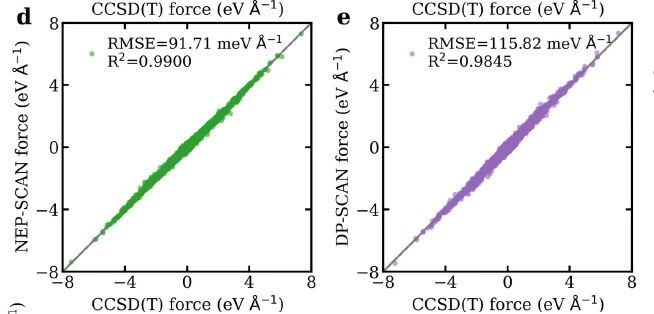
Fig. 2 | Evaluation of force accuracy and computational speed.
该研究基于神经演化算法(NEP),以接近CCSD(T)精度级别的MB-pol数据集为训练基础,结合路径积分分子动力学 [PIMD,集成于GPUMD 4.0, MGE Advances3, e70028 (2025)] 与量子修正技术,成功捕捉了水分子的量子行为。令人惊叹的是,研究团队仅使用了原数据集的1%(1250个结构)进行训练,就达到了优于多数全数据集训练模型的精度,且在计算速度上比传统量子化学方法快10万倍,甚至比经典经验势函数SPC/E更快。
Fig. 3 | Radial distribution functions, density, and isobaric heat capacity of water.
模拟结果显示,NEP-MB-pol不仅在径向分布函数、密度和热容等静态性质上与实验高度吻合,更首次在不引入任何实验参数的情况下,同时准确预测了自扩散系数、剪切粘度和热导率三项关键输运指标,涵盖了280–370 K的温度范围。尤其值得一提的是,该研究明确揭示了核量子效应在微观结构性质与输运过程中的的核心作用,解决了长期以来量子修正方法在液体输运系数预测中的适用性难题。
Fig. 4 | Transport coefficients of water.
该框架的成功,不仅为水科学研究提供了“一站式”模拟解决方案,也为极端条件下(如高温高压、界面限域)水行为的研究开辟了新路径。其在能源材料、生物物理、环境科学等领域的应用前景广阔,例如燃料电池中的质子传输、纳米通道中的流体行为、冰川下的相变机制等,均有望藉此获得更深入的理解。该文近期发表于npj Computational Materials 11,279(2025),英文标题与摘要如下,点击左下角“阅读原文”可以自由获取论文PDF。
NEP-MB-pol: a unified machine-learned framework for fast and accurate prediction of water’s thermodynamic and transport properties
Ke Xu, Ting Liang, Nan Xu, Penghua Ying, Shunda Chen, Ning Wei, Jianbin Xu & Zheyong Fan
The complex interatomic interactions and strong nuclear quantum effects in water pose significant challenges for accurately modeling its structural, thermodynamic, and transport behavior across varied conditions. While machine-learned potentials have improved the prediction of either static or transport properties individually, a unified computational framework that accurately captures both has remained elusive. Here, we introduce a machine-learned framework with a highly accurate and efficient neuroevolution potential trained on extensive many-body polarization reference data approaching coupled-cluster-level accuracy, combined with path-integral molecular dynamics and quantum-correction techniques. By capturing the quantum nature of water, this framework accurately predicts its structural, thermodynamic, and transport properties across a broad temperature range, enabling fast, accurate, and simultaneous prediction of self-diffusion coefficient, viscosity, and thermal conductivity. This work represents a major stride in water modeling, providing a unified and robust approach for exploring water’s thermodynamic and transport properties, with broad applications across multiple scientific disciplines.